







ARTSblog: A Nation at Risk – 30 Years Later
 Thirty years ago education took a dramatic turn that resulted in cuts in art programs and increased testing of a narrowed curriculum.
Thirty years ago education took a dramatic turn that resulted in cuts in art programs and increased testing of a narrowed curriculum.
 Have you ever wanted to sit down with Bette and ask her questions?
 There are several different learning styles, and each has a direct impact on how your child learns, processes information, and their level of success in the classroom.
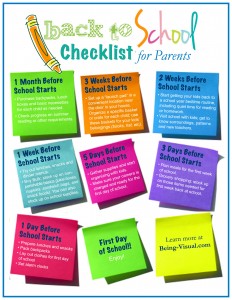 It’s back-to-school season — and just like that, swimsuits and towels are traded in for school clothes and backpacks, summer toys are exchanged for binders and school supplies and ice chests are replaced by lunch boxes.
 As we get our kids ready to go back to school, let’s remember how important it is for them to get back to art.
Here’s a great Cinderella story about how one principal used art to dramatically transform a failing school.

Ever wonder why people do the things they do? Why doesn’t your husband read the directions? Why can’t you find anything once you take the time to file the papers in your office? Why do you have to pinch and poke yourself to stay awake during language heavy presentations?
It’s all about wiring. The way our brains are wired has a direct affect on the way we organize or don’t organize; the way we see, think and do and the way we operate at home, school and work. There are three distinct learning styles: auditory, visual and tactile.
Auditory folks are good with words and logical, linear thinking. Visual learners are big picture, innovative thinkers that need to see things. Tactile people take a very hands-on approach to life.
So what kind of thinker are you? There are a variety of learning style tests on-line but here’s a quick question to get you started:
Imagine you just came back from the store with a new cabinet that needs to be assembled. How would you proceed?
Are you creative? Can you draw? Paint a picture? Do you hold a patent for a new invention that will change the way we live?
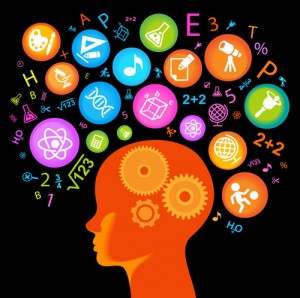 Creativity is often defined in relation to artistic ability but creative thought reaches far beyond the arts and has profound implications in all parts of our lives. Creativity is about thinking outside the box, bringing fresh insight to established patterns of thought, rules and relationships. Creativity is a process of personal expression and playful pursuit, but creativity is also a highly sought after commodity, in business as well as the arts. Creative ideas may produce a work of art or music, it can lead to breakthroughs in science and engineering, increased personal satisfaction and career success, even solutions to highly complex social issues.
We are all capable of creative thought, but like other skills, it requires development. Countries all around the world have made the development of creativity a priority. However, while the United States has been a world leader of innovation in the past, increased emphasis on standardization, testing and cuts in arts programs, means we are no longer developing creativity and innovation in our students. Yong Zhao, author of
Have you been labeled – scatter brained, distracted, inattentive, even impulsive? Has your child? Perhaps ADD or ADHD diagnosis has been away to explain these behaviors. Diagnosing ADD or ADHD is highly subjective and comes with a multitude of negative connotations. But what if it’s not a negative? What if its not even ADD ?
There’s good news. Visual learners share many of the same traits as ADD. Visual learners need more visual, hands on learning experiences and often struggle to organize, stay on task and pay attention. This is increasingly apparent with children in today’s language heavy, test oriented classrooms. And yet there are great advantages to being a visual learner. Some of our most creative minds, great leaders and innovative business people have been and are visual thinkers.
 All I wanted was to do art with kids — to teach and empower — to see their sweet faces light up with every new discovery. My young students thrived when they got the “how to” information they craved. And while teaching children how to draw, they taught me — again and again — how important art is to them. In my book, Being Visual, I talk about my 20 years experience teaching young kids how to draw by using their preferred learning style. The classes and teaching method were popular and effective, so I made a business out of it. But it’s never really been about the business.

I was recently talking to a good friend about a school that needs to attract more students – so they have decided to pursue an art & technology focused curriculum. Lynn is a gifted math teacher, with a passion for the arts, who recently moved from a strong suburban school district in Illinois to a struggling district in California. She currently teaches 8th grade math to what many would consider a pretty tough audience, but as great teachers do, she sees past the labels and test scores to find the children inside.
