








Creating Order for Curious Minds
If you have a visual learner, when they’re at home you see this child who is bright, dynamic, exciting. When they get into the classroom and they start school, you might start to notice some areas where they’re struggling or there are some challenges. What can you do to help?
 When the Kindle and Nook were first introduced I couldn’t imagine giving up the feel of paper and pages for a slim piece of cold technology. As a visual thinker, I know that certain books just won’t work for me on an eReader. But why?
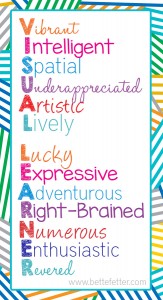 Visual Learners are some of our favorite people. Here are some of the reasons why :
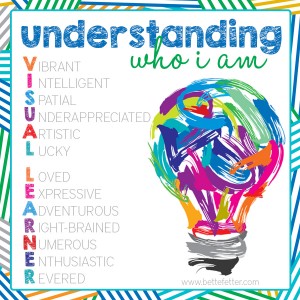 This is THE episode to understand visual thinkers and what they need to be successful. Join me as I explain how left and right brain thinking works and the difference between the two.
 As much as we need to be sensitive to the needs and stresses visual learners face – it’s not time for excuses or a pity party. Visual learners are highly intelligent people that need some help understanding how their mind works and getting in sync with the educational system so they can thrive and really develop.
  Supporting, enhancing and enriching your visual child’s experience at school comes down to you.
 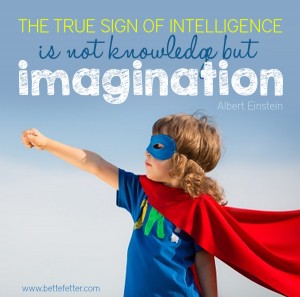 Something to remember as our visual learners go back to school and the methods of evaluation seem to reflect poorly on our innovative, creative, amazing children.
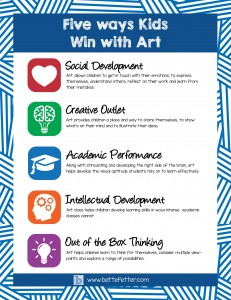 Art is a universal language. It’s joyful. It’s inclusive. It knows no boundaries. When children make art, they experience the unique satisfaction and joy that making art offers.