Imagine my excitement when Education.com asked me to share insight from my book, Being Visual. What an honor! If your child is a visual learner, they may be struggling in the classroom. Understanding learning styles is a fantastic way to help a child succeed academically. We parents don’t like to settle for anything less then success for our kids and I’m excited to have the opportunity to help.
Education.com is a great resource for parents and educators. They
Right brain, visual-spatial individuals are conceptual, non-linear thinkers and they often miss details, struggle with memorization and prefer images over words. Visual students don’t usually test well. Some may even struggle with test anxiety. But there are always going to be tests at school and we need to help our visual kids conquer their fears and improve test scores.
Here are 10 studying activities to help your visual elementary kids study:
Make learning visual – When classroom material is presented visually, your visual student is already on their way to more successful studying. These learners remember images – not words.
Write notes – The physical act of writing actually helps visual kids remember. Write very simple notes over and over again to help remember.
Add Images – Along with writing words, add simple images to help trigger memory. This is great for vocabulary practice. Again, visual kids remember pictures – not words.
Use color – Add color whenever you can. Take notes in color. Write key words in color. Write on colored notecards. Use a highlighter to help ‘see’ key information.
Make vocabulary colorful –To practice vocabulary words, write each one on flashcards. Add an image. Use colored markers, or colored notecards. Take the learning even further by using a different color for each syllable.
“I’m not smart. I’m not the same as the other kids. How come I don’t get good grades like they do? I’m not smart like they are.”
I met with a group of parents to share information about learning styles and ways to help our visual learning children do better in the classroom. A mother seated in the front row had raised her hand and asked that question about her 9 year old daughter.
Visual students don’t usually test well and may even struggle with test anxiety. Right brain, visual-spatial individuals are conceptual, non-linear thinkers and they often miss details, struggle with memorization and prefer images over words. But there are always going to be tests at school and we need to help our visual kids conquer their test […]
I have shared lots of stories and strategies for teaching visual kids, but even adult learners need things to be more visual. Here’s a story about my time in a college statistics class, overwhelmed by the language and computation, until it became more visual.
Math is not usually a favorite subject for visual students. It doesn’t mean they’re not good at it. Your child may be struggling and less successful in the classroom because of the way math is being taught. Remember, our visual learners have their own way of seeing things.
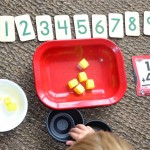
Visual learners are conceptual and less detail-oriented. To engage them in math concepts, use manipulatives, play board games, teach concepts and add images wherever possible.
Education.com is a great resource for parents and educators. They have dedicated themselves to providing information to parents in order to help kids reach their full potential. The site is one of my favorites and contains articles, activities and thoughts from experts in their fields. The information is organized and presented by age group and covers everything from seasonal craft and play activities to parenting tips, to education tools and strategies. If you aren’t familiar with the site, I encourage you to take the time to visit www.Education.com. I am sure you will find it so valuable you will find it a must to bookmark.
Recently, I met with a group of parents to share information about learning styles and ways to help our visual children do better in the classroom. We had a great discussion afterwards with several parents sharing their observations and asking questions. I sincerely enjoy these talks and being able to share the important role that learning styles play in a child’s academic and overall development and success.
A mother seated in the front row raised her hand. She asked a question about her 9 year old daughter that touched upon the emotional side of learning that so many young visually oriented children experience.
We had some fun when we headed to the WGN-TV news studios in downtown Chicago. After reviewing my newly launched book, Being-Visual, I was thrilled that WGN invited me to appear on a “Focus on the Family” spot, to share tips on helping visual kids do better in the classroom. Originally, the segment was scheduled to be taped live and I must admit, knowing the large audience that WGN reaches, a bit of nervousness settled upon me. However, news about the Chicago teachers strike forced the station to make some changes to their schedule, so we taped our session to be aired at a later date this month on September 25.
There is tremendous value in developing children’s creativity and learning abilities, but being creative is not just about the arts. Thinking creatively is the ability to see new solutions to a problem, to connect disparate thoughts and find and apply new ideas. This is a process of divergent thinking which comes naturally to right-brain, visual-spatial […]
Get the best tips to make homework and learning easier for everyone especially the visual learner and make it easy for you to stay ahead of the curve and keep your child on top.









 Imagine my excitement when Education.com asked me to share insight from my book, Being Visual. What an honor! If your child is a visual learner, they may be struggling in the classroom. Understanding learning styles is a fantastic way to help a child succeed academically. We parents don’t like to settle for anything less then success for our kids and I’m excited to have the opportunity to help.
 Right brain, visual-spatial individuals are conceptual, non-linear thinkers and they often miss details, struggle with memorization and prefer images over words. Visual students don’t usually test well. Some may even struggle with test anxiety. But there are always going to be tests at school and we need to help our visual kids conquer their fears and improve test scores.
 I met with a group of parents to share information about learning styles and ways to help our visual learning children do better in the classroom. A mother seated in the front row had raised her hand and asked that question about her 9 year old daughter.
  I have shared lots of
  Math is not usually a favorite subject for