








In Case You Missed It….
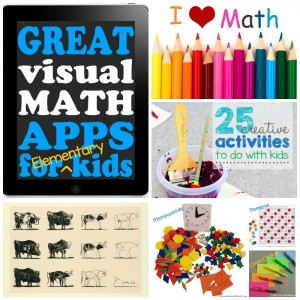 We have been busy this month addressing many things such as how to Get Your Child to Be a Math Whiz and How Doing Nothing at Home Prepares Your Child for Testing. We’ve made a list of creative activities for kids and found 10 Great Math Apps for your elementary student. If you missed something feel free to check it out now.
 Do you want your child to go from “I hate math” to “I love math?” Do you want them to have that teacher – the one that makes it so fun, so attainable – that it changes their entire attitude? My friend Lynn is one of those remarkable teachers, the kind you and your child will always remember.
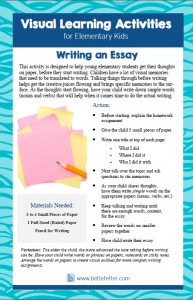 Organizing their thoughts for a writing assignment can be a difficult task for visual learners.
 With most of the children from third grade through high school taking standardized tests this Spring, I thought you might find these useful.
 You and your child made it to the finish line… almost. Today’s final exercise is a chance to take all the skills we’ve practiced this week and put them together. Drawing, writing, spacing and coloring: invaluable ingredients to perfecting handwriting at any age.
 Another common issue early writers struggle with is the spacing between words. Kids are either writing HUGE LETTERS that are spaced out beyond belief or they can often be found writing tiny, tiny, tiny letters squished so close together you can’t read them.
 Who doesn’t love to color? Even adults, who swear they have no artistic training or skill can’t pass up a few easy shapes and a new box of crayons or fresh juicy markers.
 Day Four of the Handwriting Challenge is another easy, but effective set of exercises. No matter the trend, year, even age, this classic activity always wins.
  Handwriting is all about drawing. Writing is drawing letter shapes, while being aware of the sizes and unique details of each letter.
 Drawing shapes is great precursor to writing without the stress of letter shapes or words. The physical steps of drawing shapes repeated will greatly help your children developmentally. Going through a repetitive step such as drawing shapes will reinforce the process and the muscle memory. It also helps develop pencil control.