It can seem overwhelming to be stuck in a car for hours on end with the kids and you may be worrying about how to keep them entertained and engaged.
I have great news!
Road trips provide a unique opportunity for learning with your captive audience and I have some great ideas for ways to make it fun and engaging while learning a little something along the way.
Here’s a taste of what we have in the eBook.
• Fun with Maps • Road Trip Bingo • Billboard ABCs
Remember, learning games can also be played in the car on road trips. I’ve added a couple art and movement activities to ramp up the fun factor and keep it visual too.
These activities should keep them busy for hours. But just to change it up a bit, don’t forget to try the classics like, I Spy and 20 Questions. Keep it light and fun!
Download my eBook Stop Summer Brain Drain: 7 Creative Ways and see what kind of learning develops while you’re on the road.
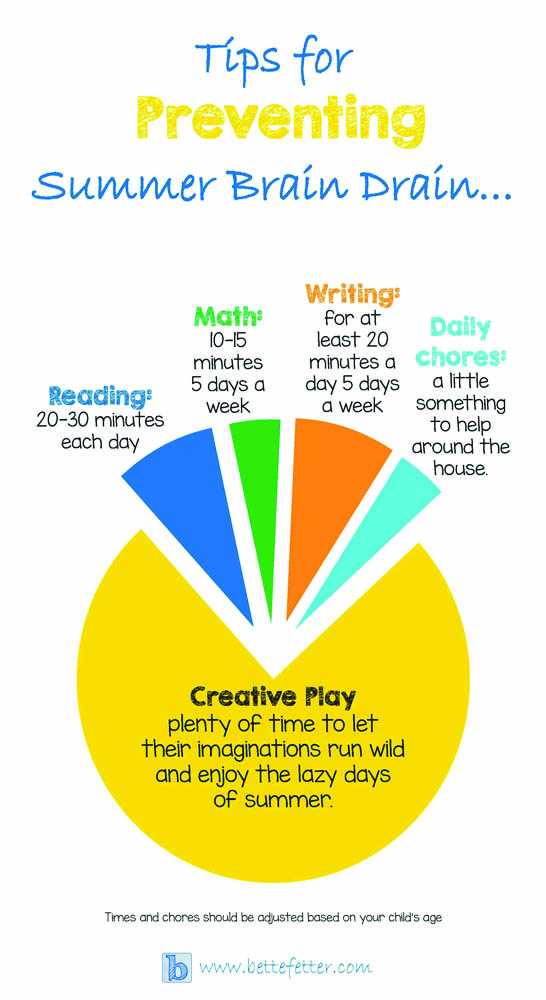
The first step to keeping the brain drain plugged is having a plan for the summer. I have created this simple infographic to help you with your summer learning plan.
Our new summer eBook is perfect for keeping brains active. “Stop Summer Brain Drain: 7 Creative Ways” has insider tricks, like this handy schedule, on how to stop summer learning loss. Download it today!
The laid back scheduling of summer can lead to some summer knowledge leaks. Lucky for you we’ve created a new eBook to keep brains active this summer. “Stop Summer Brain Drain: 7 Creative Ways,” has insider tricks on how to stop summer learning loss. Download the book today.
The best way to keep the brain drain at bay is to continue reading everyday throughout the summer. It doesn’t have to be just sitting down and reading a book, there are lots of ways to sneak reading into your day. Find other ways for the kids to make connections to the material. Just 20-30 minutes per day of any kind of reading is going to keep them fluent while exposing them to new ideas and ways of reading.
Try these simple ways to make reading fun.
• The library summer reading program • Audio books and literacy apps. • Read summer reading lists together • Have a family book contest. • Poems, magazines, nonfiction, comic books, etc. • Compare the movie and the book.
Learning shouldn’t stop just because it is summer break… Get the new eBook from Bette Fetter, Young Rembrandts founder and CEO and stop summer learning loss.
If summer days are consistently lazy – a significant amount of what went into building your child’s brain during the school year will start to leak out. Summer brain drain can amount to a significant learning loss, as much as 2 ½ months per student, with the biggest losses in math and reading. Consistent summer losses can cause a child to be 2 years behind their peers by 6th grade. By 9th grade, summer losses are considered responsible for 2/3 of the achievement gap. When kids head back to the classroom in the fall, teachers spend valuable teaching time, anywhere from 2 to 6 weeks, re-teaching what was lost over the summer.
Kids can lose up to 2 months of what they’ve already learned over the laid back days of summer. Don’t let your child fall behind. We have created an eBook full of fun and free ways to keep the learning alive without sacrificing the freedom that no school allows. Get on the list to be the first to receive Stop Summer Brain Drain 7 Creative Ways when it is released on June 6th. And, sneak some learning into the play this summer.
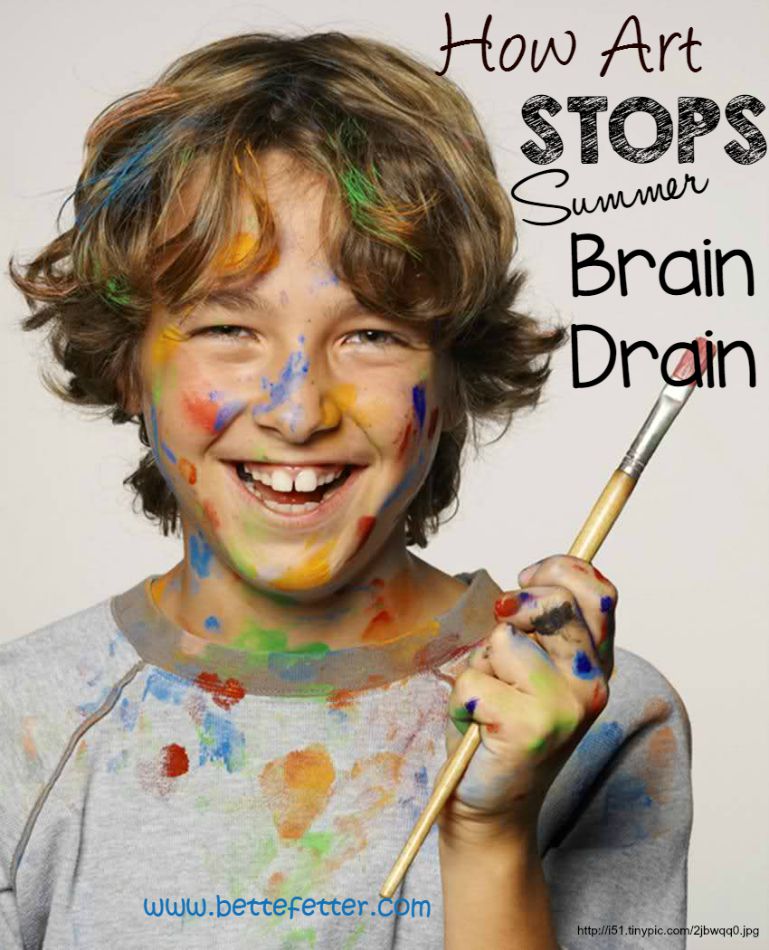
Do you have a kid that wants to spend their summer doing art? They want to build things. Make things. Draw things. Paint and color. All day. Every day. They just can’t seem to get enough. It seems that’s all they’re interested in. And maybe you’re wondering what’s going on or is there something else they should be doing ?
If this is your child, it sounds like you have what I affectionately call an ‘art kid’. Art kids are visual learners, driven to satisfy what the right side of their brain is craving and that’s art. Their brain wants hands on creative activity. The right side of everyone’s brain is about innovation and big picture thinking and, doing art is the way young children best explore, satisfy and develop this side of them.
Why so much art in the summer? The right side of our brain is always driven to do art. It needs art the way a fish needs water. But during the school year there are many other things to attend to and unfortunately not enough time devoted to the arts. This is even more of a predicament when schools don’t include art as a core subject or integral part of a child’s learning. Visual kids need art to learn and without it they’re fish out of water.
Summer is a perfect time to indulge and immerse in art. The ‘lazy days’ of summer are by design full of opportunity to think, day dream, imagine – all things that can lead to endless hours of creative pursuit. And not to worry, when your kids are busy doing art, they’re also busy building their brains. The right side of the brain thinks in color and pictures. It sees and thinks 3-dimensionally. It craves multisensory input, thinks in patterns and loves the pursuit and expression of multiple ways of seeing. Doing art allows the brain to do what it does best.
So whether it’s a morning spent drawing, building and making or an afternoon at art and drawing camp; relax, knowing great things are happening in your child’s development. Your kids are happy. They’re minds are active. Their brains are growing. Their hearts are full.
For some more great ideas for keeping the Summer Brain Drain at bay, check out my other STOP Summer Brain Drain posts.
The key to preventing summer learning loss for all kids, especially visual learners, is to make learning hands on, make it visual, add lots of art and time to create and above all – make it FUN. There are tons of great ideas out there and we’ve been busy gathering the best and brightest ideas for you and your visual learner. Summer lends itself to messy, creative and experimental activities because everything can be done outside! As part of our Summer Brain Drain series, I would like to offer you a list of simple, fun and educational activities to try with the kids this summer.
Make some “snow”, only 2 ingredients and soooo much fun!! Click here to learn how.
How creative can you be with a cardboard box? Check out these ideas to keep the kids innovating on a rainy day.
Being Visual: Raising a Generation of Innovative Thinkers
Are your kids feeling left behind or misunderstood at school?
In a test heavy education system, more and more children are underachieving, feeling lost and misunderstood. Schools are focused on teaching left-brain auditory learners and our right-brain visual kids are not getting what they need to succeed. My book, Being Visual, helps parents better understand their visual tactile child and shares specifics strategies to increase their success in school.
Find out how…
• To use pictures to improve grades
• To apply visual methods for students with ADD, dyslexia and autism
• Why drawing, doodling and imagery improves learning
• How art improves education outcomes
You can also find Being Visual on your favorite device:
Stop Summer Brain Drain
If kids aren’t continuing the learning throughout the summer, they can lose up to 2 months of knowledge. If you add that up through 6th grade that can put them almost 2 years behind their peers. But, how do we prevent this loss and still keep summer fun and carefree?
Great news! We have created an eBook full of ideas to keep all that hard earned knowledge from going down the drain without sacrificing the fun.
By concentrating on these 7 different areas of learning you can keep the kids\’s brain engaged all summer while they are still getting lots of time to just be kids and enjoy the break from school.
Learn to Draw Cartoon Zoo Animals
If your child likes art he/she will love our newest drawing book; CARTOON ZOO ANIMALS. The latest book from Bette Fetter, founder and CEO of Young Rembrandts, is a collection of How to Draw videos that will teach children to draw monkeys, tigers, giraffes and more. It’s a perfect activity for anyone ages 3-99.
Get ready to UNLEASH your child’s creativity with this CARTOON ZOO ANIMAL drawing book. The detailed drawing videos will inspire hours of ideas and activity, while successfully walking your child through every step of the drawing process. It’s perfect for children that love to draw or color and are hungry for more.
The book also has great things for you on why the arts are so important to a child’s development, how it improves their performance in the classroom and the value of building basic art skills. You can use this book for one child – or with a group.
Download this eBook immediately and set it up on your computer, laptop or tablet – and get your kids ready for hours of fun.
Learn to Draw Cartoon Princesses
Calling all Princesses!
It’s time to draw castles, crowns, princesses and sparkly jewels. We’ve bundled lots of new How to Draw videos into our latest eBook, Princesses & Enchanted Treasures!
These drawing videos are perfect for anyone ages 3 to 99. They’ll help build your child’s confidence, improve their drawing ability and lead to hours spent drawing and coloring.
5 Things to Draw for the Holidays
I \’ve got a great way for your children to learn how to draw while giving you a few minutes to finish up those last minute holiday tasks!
5 Things to Draw for the Holidays is an eBook created for parents and children. The book is filled with 5 simple step by step instructional drawing videos for kids. Each video teaches your children to draw a different iconic holiday character. They are so much fun your children will want to draw them over and over. I designed this book so children can do these videos with friends, family or as a quiet independent activity.
The book also has great things for you on why the arts are so important to a child’s development, how it improves their performance in the classroom and the value of building basic art skills. You can use this book for one child – or with a group.
For this eBook, I’ve gathered an assortment of fun activities to keep your kids busy. There are activities you can do In the House and activities that are Out of the House. Hopefully, you can get out to do some of these activities as a family.


 Do you have a kid that wants to spend their summer doing art? They want to build things. Make things. Draw things. Paint and color. All day. Every day. They just can’t seem to get enough. It seems that’s all they’re interested in. And maybe you’re wondering what’s going on or is there something else they should be doing ?